cosermap logo
Local Weather
7-Day Forecast
Show Local Weather
Loading...

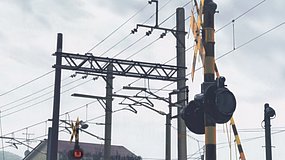
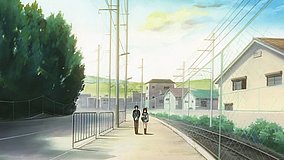
the disappearance of haruhi suzumiya hankyu kouyou line crossing

The Disappearance of Haruhi Suzumiya

Kyoto

Episode
Ep. -
Time
74m 11s
the disappearance of haruhi suzumiya hankyu kouyou line crossing
  • Nearest Station: Kōyōen Station on the Hankyu Kōyō Line
  • Walk: about 8 minutes on foot
  • Best time to visit: Late afternoon in winter or on an overcast day for the closest atmosphere
  • Crowd level: Usually quiet
  • Kyon and Yuki Nagato stand near a quiet railway crossing as the winter cityscape reinforces the film's subdued, uneasy mood.
  • This moment appears during one of the most oppressive and pivotal stretches of The Disappearance of Haruhi Suzumiya. After the world has been altered, Kyon is overwhelmed by confusion and anxiety as the everyday reality he knew suddenly feels unfamiliar, while Yuki Nagato appears before him in a quieter and more distant manner than usual. As they pass this railway crossing, the winter streetscape and the tracks emphasize the story's sense of a reality that has been split apart. Kyon struggles to understand the truth behind the change while gradually realizing the loneliness and burden Nagato has been carrying. Rather than using action, the film relies on silence, pauses, and physical distance to express hesitation, exhaustion, and a subtle shift in trust between the characters, setting up the deeper conversations and choices that follow. In real life, this is a crossing on the Hankyu Kōyō Line, and the overall street composition is very close to the anime version. The direction of the tracks, the crossing equipment, the road width, and the feeling of a residential neighborhood pressing in around the railway all make the source easy to recognize. The anime cleans up some background elements, simplifying utility lines, small roadside fixtures, and certain building details to create a tidier frame that emphasizes the characters and the space, but the warning poles, signal placement, and slight slope of the area remain highly faithful. Local signs and everyday markings have changed over time, so modern road paint, traffic notices, and house exteriors may differ somewhat from the film's period atmosphere. Even so, the area still preserves the quiet, cold, slightly detached Nishinomiya residential mood so central to the film, making it one of the stronger and more recognizable pilgrimage spots.
Is this crossing easy to visit from central Nishinomiya or Osaka?
Yes. The simplest route is via Hankyu Kōyō Line to Kōyōen Station, then a short walk through a quiet residential area.
Can I safely recreate the anime angle at the Hankyu Kōyō Line crossing?
You can photograph it from public roadside space, but do not stand near the tracks or block the crossing. Trains and local traffic are active, so quick, respectful shooting is best.
Are there shops or facilities nearby for anime pilgrims?
The immediate area is mostly residential, so convenience options are limited right by the crossing. It is better to use the station area before or after your visit for drinks, snacks, and restrooms.

© 2026 Coser Map. All rights reserved.